
What's the first step to helping kids learn healthy habits about money matters? Open a Savings account in their name! You can help a child in your life get started, one small step or one giant leap at a time. Teach your child to Dream Big!

Help young ones learn about financial literacy by exposing them early to the idea of sound money habits. Wondering where to start? Here are a few ideas to help get you started:
- Earning Money: This fundamental concept helps them understand the value of money and the effort needed to earn it. Encourage them to earn money by doing house chores or other jobs around the house.
- Setting Savings Goals: Help them plan for things they want to buy, like a new toy or game. A simple piggy bank and writing down how much they have saved versus how much they need will help! They can also open a savings account at the credit union and learn to start banking.
- Counting Money: Instill money-counting skills using different coins and notes. Depending on their age, introduce them to various payment methods, including cash and mobile payments, explaining how each transaction is completed.
- Charity and Gifts: Encourage them to spend part of their money on charity or buying presents for friends, fostering a sense of generosity and community belonging.
- Delayed Gratification: Teach them the value of hard work and the benefits of saving for something they want rather than making impulse purchases.
By incorporating these money lessons into your child's routine, you can pave the way toward their financial success.
Looking for more ways to teach children about smart money management? Check out our website for tips.
Better yet, get them started with a Youth Savings account at the credit union:
- Open with as little as $5.00
- Youth and Teen Certificates also available
- Ages 1-17 receive a birthday card and deposit match offer during child's birthday month
You'll need the child's Birth Certificate, Social Security Card, and an adult as joint owner on the account. Stop into one of our locations in Sparta, West Salem, or Tomah to open a Youth Account during the month of April to celebrate Credit Union Youth Month!
Choosing a checking account may seem simple at first. Most accounts let you deposit money, pay bills, use a debit card, and cover everyday purchases. But when you start comparing options, the details matter more than many people expect.
The right credit union checking account should fit the way you actually manage money. It should help you avoid unnecessary fees, give you easy access to your funds, and offer tools that make day-to-day banking easier.

Instead of focusing only on a promotion or a single feature, it helps to look at the full picture.
What to Look for in a Credit Union Checking Account
When comparing checking accounts, some of the most important features include:
• Low or no monthly fees
• Easy access to your money
• Online and mobile banking tools
• Overdraft options and safeguards
• Direct deposit convenience
• Helpful member service
• Useful extra perks
A strong credit union checking account should support how you bank in real life, not just look good on paper.
Low or No Monthly Fees
One of the first things many people look at is cost. That makes sense because monthly fees can slowly chip away at your balance over time.
Look for an account that is clear and reasonable about costs. For example:
• No monthly maintenance fee
• A low fee that is easy to waive
• Simple requirements to avoid charges
• No confusing fine print
Even small fees add up over a year. That is why this is often one of the most important features to compare first.
Easy Access to Your Money
A checking account should make it simple to use your money when you need it. That includes purchases, cash withdrawals, transfers, and bill payments.
Important access features may include:
• A debit card for everyday spending
• ATM access in convenient locations
• Branch access for in-person help
• Easy transfers between accounts
Some people do nearly everything digitally. Others still like being able to stop into a branch and talk with someone face to face. The right fit depends on your habits.
Online and Mobile Banking Tools
Digital access is no longer a bonus feature. For many people, it is one of the biggest factors in choosing an account.
A modern credit union checking account should make it easy to bank from anywhere. Helpful tools may include:
• Online banking access
• A mobile banking app
• Mobile check deposit
• Bill pay
• Account transfers
• Balance and transaction history
• Account alerts and notifications
These features can help you:
• Check your balance before making a purchase
• Deposit a check without visiting a branch
• Move money quickly
• Keep a closer eye on spending
• Catch problems earlier
When comparing accounts, do not just ask whether these tools exist. Think about whether they are likely to be easy and useful in everyday life.
Overdraft Options and Account Safeguards
Overdrafts happen, which is why it helps to understand how an account handles them before you open it.
Things to review include:
• Whether overdraft protection is available
• Whether you can link another account for backup coverage
• How overdraft fees work
• How transactions are handled if funds are low
It is also smart to look at built-in account protections. Useful safeguards may include:
• Fraud monitoring
• Transaction alerts
• Card controls
• Lost or stolen card reporting
• Fast access to support if something looks wrong
These features can make a real difference when you need to protect your money quickly.
Direct Deposit and Everyday Payment Convenience
A good checking account should fit smoothly into your routine. Direct deposit is one of the easiest ways to make everyday banking simpler.
Common convenience features include:
• Direct deposit for paychecks or benefits
• Automatic bill payments
• Recurring transfers
• Easy person-to-person payments
• Straightforward money movement between accounts
These tools help reduce extra steps and make it easier to stay organized.
A credit union checking account should work with your habits, not force you to work around the account.
Member-Focused Service Can Make a Real Difference
Features matter, but service matters too. When you have a question about your account or need help solving a problem, support becomes very important very quickly.
Many people value a credit union relationship because it can offer:
• More personalized service
• A local, community-centered approach
• Helpful guidance instead of a one-size-fits-all answer
• A stronger focus on member needs
For some account holders, this personal support is just as important as digital tools or ATM access.
Extra Perks Can Add Value
The basics should always come first, but extra features can still make one account more appealing than another.
Depending on the account, those added benefits might include:
• High-yield dividend Rewards
• ATM fee reimbursements
• Digital Wallet link for faster, secure contactless payments
• Other convenience features and partnership perks or discounts
These perks can be helpful, but they should support the core account rather than distract from important details like fees, access, and usability.
How to Choose the Right Account for the Way You Bank
The best checking account for one person may not be the best choice for someone else. That is why it helps to think about how you actually bank.
For example:
• If you bank mostly on your phone, mobile tools may matter most
• If you prefer face-to-face help, branch access may matter more
• If you want to avoid costs, fees and ATM access may be top priorities
• If you like automation, direct deposit and bill pay features may be especially useful
When choosing a credit union checking account, it helps to match the account to your real habits instead of choosing based only on a promotion.
Common Mistakes to Avoid When Comparing Checking Accounts
When reviewing options, some common mistakes can make it harder to choose the right account.
Watch out for things like:
• Focusing only on a short-term promotional offer
• Overlooking monthly or overdraft fees
• Ignoring ATM access and branch convenience
• Assuming all mobile banking tools are the same
• Choosing an account based on habit instead of current needs
A little comparison upfront can save frustration later.
Why a Credit Union Checking Account Can Be a Smart Choice
For many people, a credit union checking account offers a practical mix of value, convenience, and service.
That can include benefits like:
• Easier everyday banking
• Lower or more manageable fees
• Helpful digital tools
• Reliable access to funds
• Stronger member support
The right account should help make daily financial tasks easier, not more complicated.
Open a Checking Account That Fits the Way You Bank
If you are looking for a checking account, it helps to focus on the features that matter in real life.
Look for an account that offers:
• Easy day-to-day use
• Fair and understandable fees
• Strong digital banking tools
• Reliable access to your money
• Helpful support when you need it
At 1st Community Credit Union, taking time to compare checking options with these priorities in mind can help you find the account that fits the way you bank.
Learn More About Checking Accounts
Frequently Asked Questions
What is a credit union checking account?
A credit union checking account is a transaction account that allows members to:
• Deposit money
• Make purchases
• Pay bills
• Withdraw cash
• Manage everyday spending
How is a credit union checking account different from a bank checking account?
Both serve similar day-to-day purposes, but credit unions are member-focused financial institutions. Many people choose them because of:
• Personal service
• Community connection
• Account value
• A more relationship-based approach
What fees should I watch for in a checking account?
Common fees may include:
• Monthly maintenance fees
• Overdraft fees
• ATM fees
• Minimum balance-related charges
It is always a good idea to review the account terms carefully before opening an account.
Can I manage a credit union checking account online?
Yes. Many credit unions offer digital tools such as:
• Online banking
• Mobile banking
• Mobile deposit
• Bill pay
• Alerts
• Transfers
What features matter most in a checking account?
Some of the most important things to look for are:
• Low fees
• Easy access to funds
• Good online and mobile banking tools
• Overdraft options
• Account safeguards
• Helpful member service
If you want more financial stability, you don’t just need “a savings account.” You need the right kind of savings account and a clear plan for how to use it.
That’s where high-interest savings accounts come in. By earning more on the money you’re already setting aside, you can reach your goals faster, handle emergencies with less stress, and build a stronger financial foundation over time.
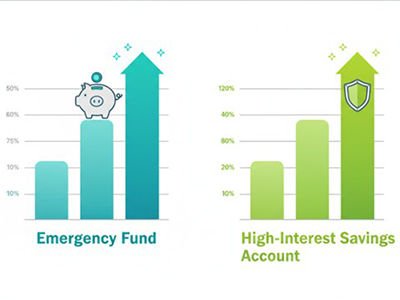
Below, we’ll break down what high-interest savings accounts are, how they support financial stability, what to look for, and how 1st Community Credit Union can help you put your savings to work.
What Is a High-Interest Savings Account?
A high-interest (or high-yield) savings account is simply a savings account that pays a higher dividend/interest rate than a standard savings account. Over time, that higher rate helps your balance grow faster—especially when you leave the money alone and keep adding to it.
Instead of earning a very small amount of interest each month, a high-interest savings account helps you:
- Grow your emergency fund more quickly
- Hit short-term goals (like vacations or holiday spending) sooner
- Build savings for bigger goals with less out-of-pocket strain
At 1st Community Credit Union, accounts such as the Ultimate Savings and Money Market accounts are designed to offer higher dividend rates when you maintain certain minimum balances, giving you a way to earn more on larger savings balances while still keeping your money accessible.
Why Financial Stability Matters… More Than Just “Having Money”
“Financial stability” doesn’t mean being rich. It means:
- You can cover your basic expenses
- You can handle an unexpected bill without panic
- You’re making steady progress toward future goals
When you have a strong savings cushion, you:
- Sleep better at night
- Don’t have to rely as heavily on credit cards
- Have more control when life changes unexpectedly (job change, car repair, medical bill, etc.)
High-interest savings accounts are one of the simplest tools to support that stability. They don’t require you to understand the stock market or take on big risks. They reward you for doing something you already know you should do: save regularly.
5 Ways High-Interest Savings Accounts Support Financial Stability
1. Your Money Grows Faster Without Extra Effort
The main advantage is simple: a higher rate means more earnings on the same balance. Over months and years, that difference adds up.
If you’re already committed to saving, putting that money into a higher-dividend account is like giving your plan a built-in boost. You’re doing the same work, but getting more results.
2. They’re Ideal for Emergency Funds
Your emergency fund should be:
- Safe
- Easy to access when you truly need it
- Earning something while it sits there
A high-interest savings account checks all three boxes. Your money stays in a federally insured account at a credit union like 1st CCU, you can access it when a real emergency hits, and you’re not leaving it in an account that barely grows.
3. Separate “Buckets” Keep You Organized
Many people find it easier to save when they separate different goals.
For example, you might have:
- A high-interest savings account for your main emergency fund
- A separate savings account for a vacation or big purchase
- A money market account for a larger cushion you don’t plan to touch often
1st CCU offers flexible savings options like You-Name-It Savings, Ultimate Savings, and a Money Market account, so you can organize your goals and keep each one on track without mixing everything together.
4. They Help Protect Short-Term Money from Market Risk
High-interest savings accounts are especially useful for money you’ll need in the next few months or years. That might include:
- Emergency funds
- Property tax savings
- Tuition due in the next year
- A down payment you plan to use soon
You don’t want to risk that money in investments that could go up and down right before you need it. A high-interest savings account lets you earn more than a basic account while keeping your balance stable.
5. They Encourage Consistent Saving Habits
When you can see your balance grow—both from your deposits and the dividends you’re earning—it’s motivating. Many people find that once they start, they want to keep going.
Pair a high-interest savings account with automatic transfers, and you’ve got a simple, low-stress system to keep your savings moving in the right direction month after month.
How to Use a High-Interest Savings Account at Different Life Stages
Getting Started or Rebuilding
If you’re just beginning to save—or rebuilding after a tough season—start with:
- A specific emergency fund goal (for example, $500, then $1,000)
- Automatic transfers from checking into your high-interest savings account
- A small, realistic amount per paycheck (even $25–$50 adds up)
Your first win is simply having something set aside, in an account that actually grows.
Growing Your Financial Foundation
Once you’ve hit your early goals, you can:
- Increase your automatic transfer amount
- Use your high-interest savings account for 1–3 months of expenses
- Add a separate savings account for a specific goal (home repairs, car replacement, etc.)
This is where an account like 1st CCU’s Ultimate Savings can help you earn more on a larger cushion, as long as you maintain the minimum balance.
Planning for Bigger Goals
As life moves forward, you may use high-interest savings accounts to:
- Save for a down payment on a home
- Build a larger emergency fund (3–6 months of expenses)
- Prepare for big, planned expenses (weddings, moves, education costs)
For bigger balances, some members choose a combination of:
- High-interest savings or money market accounts
- Share certificates for money they can truly set aside for a fixed term
The right mix depends on your timeline and how quickly you might need the funds.
What to Look For in a High-Interest Savings Account
Not all savings accounts are the same. When you’re comparing options, pay attention to:
- Dividend/interest rate: Higher is better, but also consider how often it’s paid and whether it’s tiered based on balance.
- Minimum balance requirements: Some accounts require a certain minimum to open or to earn the higher rate (for example, 1st CCU’s Ultimate Savings and Money Market accounts have a $1,000 minimum opening deposit).
- Fees: Look for accounts with low or no monthly fees, or clear ways to avoid them.
- Access: How easy is it to transfer money in and out using online or mobile banking?
- Safety: Make sure deposits are federally insured (1st Community Credit Union deposits are federally insured by the NCUA, up to applicable limits).
A high-interest rate is great, but only if the account also fits your real-life needs and habits.
How 1st Community Credit Union Can Help You Build Stability
1st Community Credit Union is focused on helping members reach their goals—not just selling products. When it comes to building financial stability, here’s how 1st CCU can support you:
- Multiple savings options: Primary Savings, You-Name-It Savings, Ultimate Savings, Money Market accounts, Christmas Club, IRAs, and share certificates give you flexibility for both short-term and long-term goals.
- Competitive dividend rates: Higher rates on accounts like Ultimate Savings and Money Market mean your savings can work harder while staying accessible.
- Easy-to-use digital tools: Online and mobile banking make it simple to check balances, move money between accounts, and stay on top of your goals.
- Local, personalized support: If you’re not sure which savings option fits your situation, you can talk with a 1st CCU team member who understands both the products and the local community.
You don’t have to have everything “figured out” to start. You just need a clear first step and a partner that’s on your side.
Simple Steps to Get Started
If you’re ready to use high-interest savings accounts to build financial stability, here’s a straightforward plan:
1. Choose your main goal.
- Emergency fund?
- Bigger cushion?
- Saving for a specific expense?
2. Pick the account that fits.
- Standard savings for smaller starting balances
- High-interest option like Ultimate Savings or a Money Market account once you’re able to maintain the minimum balance
- Consider share certificates for money you can lock up for a set period
3. Automate your savings.
- Set up a recurring transfer from checking to savings each payday
- Treat it like a bill you pay yourself
4. Review and adjust a few times a year.
- Increase your transfer amount when your budget allows
- Add new goals or accounts as your life changes
5. Reach out to 1st Community Credit Union with questions.
- Visit a branch, call, or explore the website to compare accounts and learn more about current rates and options
Financial stability doesn’t happen overnight, but every dollar you move into a high-interest savings account is a step in the right direction. With the right account and consistent habits, your savings can grow faster—and your future can feel a lot more secure.
Credit cards can be one of the smartest tools in your financial toolbox — or the easiest way to dig a costly hole. With the average card APR hovering around 21.9% for balances that accrue interest in early 2025, even a small purchase left unpaid can balloon quickly. The good news? A few savvy habits can help you keep more money in your pocket, build a healthier credit score, and squeeze every perk from your plastic. Below are ten essential credit card tips, written with our 1st Community Credit Union members in mind.

1. Pay On Time, Every Time
Late payments trigger interest charges, hurt your credit score, and may still cost you up to $8 in fees under the CFPB’s updated cap for large issuers. Set up autopay for at least the statement minimum and schedule a separate reminder to pay the full balance before the grace period ends. Your future self (and your credit history) will thank you.
2. Aim to Pay in Full and Avoid Interest Altogether
Falling short of a full payoff means yesterday’s burger could cost you tomorrow’s steak dinner. At an average 21.9% APR (charged by big national credit card issuers), a $1,000 balance carried for a year adds roughly $219 in interest. Treat your credit card like a charge card. Buy only what you can clear when the bill arrives.
3. Keep Your Utilization Below 30% (Ideally Under 10%)
Credit scoring models look at the percentage of credit you use versus what is available. Using more than about 30% of your total limit can ding your score, even if you pay on time. Pay mid‑cycle or request a credit‑limit increase (without adding new spending) to keep utilization low.
4. Understand Your APR and Grace Period
Not all APRs are alike. Promotional, purchase, cash‑advance, and penalty rates differ. Make sure you know:
• Standard Purchase APR: The rate applied to everyday transactions.
• Intro or 0% APR: A limited‑time window, often 12–18 months, that can save interest — but only if you retire the balance by the deadline.
• Grace Period: Pay your statement balance in full by this date to avoid interest.
Reading the Schumer box on your card agreement takes minutes and can save hundreds.
5. Match Rewards to Real Spending (Not Aspirations)
Rewards points are only valuable if you're earning them on pruchases you'd make anyway. That's why it makes sense to choose a card that fits your everyday spending - like groceries, gas, or travel - rather than chasing bonus offers that might tempt you to overspend. 1st CCU's Visa Credit Card earns CU Rewards Points with every purchase - 1 point for every $1 spent - which you can redeem for travel, merchandise, travel gift cards, and more. Plus, you get local service without the big-bank fees.
6. Watch Out for Fees You Don’t Have to Pay
Beyond late fees, look for:
• Annual fees: Worth it only if perks exceed the cost.
• Foreign‑transaction fees: Can add 1‑3% on every purchase abroad.
• Cash‑advance fees & APRs: Start accruing interest immediately.
Credit unions like 1st CCU are historically more fee‑friendly than national banks, according to CFPB data. Contact us for more information about current fees and benefits!
7. Leverage 0% Balance Transfers, Strategically
Some credit cards lure people in with 0% balance transfer offers, but these promotions often come with hidden pitfalls - like high transfer fees and surprise interest charges when the promotional period ends. At 1st CCU, we offer a consistently low Annual Percentage Rate on our credit card, with no balance transfer fee if you're moving a balance from another card. That way, you can simplify your payments and work toward paying down debt without worrying about an expiring offer, unexpected costs, or rising rates. Sticking with a realistic budget and steady payments is often the smartest path to becoming debt-free.
8. Use Built‑In Protections
Most credit cards include:
• Zero‑liability fraud coverage
• Extended warranties
• Purchase or price protection
• Travel accident insurance
Register big‑ticket items and keep receipts so you can tap these perks if needed. Activating your card in a digital wallet (Apple Pay®, Google Pay™, etc.) also adds token‑based security for contactless transactions.
9. Monitor Your Accounts and Credit Reports Regularly
Turn on transaction alerts (text, push, or email) to spot fraudulent charges immediately. Review your free credit report at least once a year. Disputing errors can raise your score quickly, and spotting unexpected hard inquiries helps you prevent identity theft.
10. Choose a Low‑Rate Card from a Credit Union
Credit unions are member‑owned and typically offer lower Annual Percentage Rates than for‑profit issuers. When WalletHub checked in June 2025, new‑offer rates averaged 22.7%, and existing accounts averaged 21.4%, but credit‑union cards often track several points lower. 1st Community Credit Union’s credit card features a competitive fixed‑rate, no hidden fees, and in‑house service. If you’re ready to apply, visit our website or stop by any branch to chat with a local expert.
Final Thoughts
Mastering your credit card doesn’t require gimmicks, but it does demand consistency. Pay on time, spend within your means, and choose products designed to help members, not shareholders. Whether you’re building credit for the first time or fine‑tuning an established profile, the right habits today can unlock lower loan rates, bigger travel rewards, and stress‑free purchasing power tomorrow.
At 1st Community Credit Union (1st CCU), we believe that instilling financial literacy in children from a young age is crucial for their future success. One effective and engaging method to teach kids about money is through gamification—integrating game-like elements into educational activities to make learning about finances both enjoyable and impactful.

The Power of Gamification in Financial Education
Gamification leverages the natural appeal of games to motivate and educate. By incorporating challenges, rewards, and interactive scenarios, children can grasp complex financial concepts in a relatable manner. This approach not only captures their attention but also fosters a deeper understanding of money management.
Practical Ways to Gamify Financial Learning
- Educational Board Games: Classic games like Monopoly and Payday introduce children to concepts such as earning, spending, saving, and investing. These games simulate real-life financial decisions, allowing kids to experience the consequences of their choices in a fun setting.
- Digital Apps: There are numerous apps designed to teach kids about money through interactive missions and quizzes. For instance, GoHenry offers a Visa debit card and financial education app tailored for children aged 6 to 18, combining real-world money management with engaging lessons.
- Role-Playing Activities: Set up a mock store or credit union/bank at home where children can role-play as customers or cashiers. This hands-on activity teaches them about transactions, budgeting, and the value of money in everyday scenarios.
- Savings Challenges: Create a savings goal chart with rewards for reaching milestones. This visual representation encourages children to set and achieve financial goals, reinforcing the importance of disciplined saving.
Benefits of Early Financial Education
Introducing financial concepts early equips children with the skills necessary to navigate the complexities of adult life. They learn the value of money, the importance of saving, and how to make informed spending decisions. Moreover, early financial literacy fosters confidence and reduces the likelihood of future financial mismanagement.
1st CCU's Commitment to Youth Financial Literacy
At 1st CCU, we're dedicated to supporting our community's youth in building strong financial foundations. We offer resources and guidance to help parents and guardians introduce sound money management practices to their children. By working together, we can ensure that the next generation is well-prepared to make informed financial decisions.
For more insights and tips on teaching kids about money, visit our blog post on smart money management for teens and kids.
By integrating gamification into financial education, we can make learning about money a fun and rewarding experience for children, setting them on the path to a secure financial future.
Achieving financial fitness is similar to maintaining physical health; it requires discipline, planning, and regular monitoring. At 1st Community Credit Union, we believe that a well-structured budget is the cornerstone of financial well-being. By creating and adhering to a budget, you can take control of your finances, reduce stress, and work towards your financial goals.

Understanding Financial Fitness
Financial fitness involves managing your personal finances in a way that allows you to meet your current obligations while planning for future goals. It encompasses effective budgeting, saving, investing, and prudent spending. Just as physical fitness enhances your quality of life, financial fitness provides stability and peace of mind.
The Importance of Budgeting
A budget is a financial plan that allocates your income towards expenses, savings, and debt repayment. It serves as a roadmap, guiding your spending decisions and helping you avoid overspending. According to Harvard's Financial Fitness Basics, creating a budget is the first step to developing a workable spending plan.
Steps to Create an Effective Budget
- Assess Your Income: Begin by calculating your total monthly income, including your salary, bonuses, and any other sources of income.
- Track Your Expenses: Monitor your spending habits for a month to identify where your money goes. Categorize your expenses into fixed (rent, utilities) and variable (groceries, entertainment) costs.
- Set Financial Goals: Define short-term goals (e.g., building an emergency fund) and long-term goals (e.g., buying a home, retirement). Clear goals provide motivation and direction.
- Develop a Spending Plan: Allocate your income to cover your expenses and savings. Prioritize essential expenses and ensure you're contributing towards your financial goals.
- Monitor and Adjust: Regularly review your budget to ensure you're on track. Be prepared to make adjustments in response to changes in income or expenses.
Tips for Maintaining Financial Fitness
- Build an Emergency Fund: Aim to save at least three to six months' worth of living expenses to cover unexpected costs.
- Manage Debt Wisely: Focus on paying off high-interest debts first and avoid accumulating unnecessary debt.
- Automate Savings: Set up automatic transfers to your savings account to ensure consistent contributions.
- Live Within Your Means: Resist the temptation to overspend by distinguishing between needs and wants.
- Seek Professional Advice: Consider consulting with a financial advisor for personalized guidance.
1st Community Credit Union's Commitment to Your Financial Fitness
At 1st Community Credit Union, we offer a range of services to support your financial journey:
- Savings Accounts: Our savings accounts are designed to help you build your wealth over time.
- Financial Calculators: Use our online calculators to plan your budget, savings, and loans effectively.
- Educational Resources: Explore our blog and financial education resources for tips and strategies on managing your finances.
By partnering with us, you gain access to tools and expertise that can help you achieve and maintain financial fitness. Remember, just like physical fitness, financial fitness is an ongoing process that requires commitment and regular effort.
Start your journey towards financial well-being today with 1st Community Credit Union.
Managing your finances can often feel overwhelming, but it doesn’t have to be. One of the simplest and most effective ways to take control of your money is by following the 50/30/20 rule. This budgeting strategy helps break down your income into manageable categories, allowing you to save money, reduce debt, and still enjoy life. Whether you're a first-time budgeter or looking to fine-tune your financial habits, the 50/30/20 rule can set you on the right path. Let’s dive into how this rule works and how you can apply it to your life, whether you're in Sparta, West Salem, Tomah, or surrounding areas in Wisconsin.
What is the 50/30/20 Rule?
The 50/30/20 rule is a budgeting guideline that divides your after-tax income into three main categories:
- 50% for Needs: This includes essential expenses such as housing (mortgage or rent), utilities, groceries, transportation, and insurance. These are the must-haves in your budget—the things you need to survive.
- 30% for Wants: Wants are non-essential expenses that enhance your lifestyle. Dining out, entertainment, hobbies, and vacations all fall into this category. While these are the fun aspects of your budget, they should not outweigh your needs or savings.
- 20% for Savings and Debt Repayment: The final portion of your income should be allocated toward your financial future. This includes savings (such as retirement accounts or emergency funds) and paying down debt, like credit cards, student loans, or car loans.

By following the 50/30/20 rule, you create a balanced approach to budgeting that ensures you're covering your essentials, enjoying life, and planning for the future.
Applying the 50/30/20 Rule to Your Life
Let’s say you earn $3,000 per month after taxes. Here's how you could break down your budget using the 50/30/20 rule:
- Needs (50%): $1,500
- Wants (30%): $900
- Savings and Debt Repayment (20%): $600
This structure gives you a clear picture of how much you should be spending in each category. The key is to stay disciplined and adjust as needed. If you find that your needs exceed 50%, you may need to cut back on wants or look for ways to reduce your essential expenses. Conversely, if your wants are eating into your savings, it’s time to reassess your priorities.
Budgeting in Sparta, West Salem, and Tomah: Local Insights
Living in smaller communities like Sparta, West Salem, and Tomah offers unique advantages when it comes to budgeting. The cost of living is generally lower than in larger cities, making it easier to balance your needs, wants, and savings. For example, housing costs are often more affordable in these areas, which can help you stay within that 50% allocation for needs. Additionally, enjoying local events, parks, and entertainment in the area can be a great way to satisfy your wants without breaking the bank.
At 1st Community Credit Union, we understand the financial landscape in Sparta, West Salem, and Tomah. That’s why we offer a range of services and tools to help you manage your budget, including personalized financial counseling and savings programs designed to meet your needs. Whether you’re saving for a home, planning a vacation, or simply trying to build an emergency fund, we’re here to help you stay on track with the 50/30/20 rule.
Tips for Staying on Budget
- Track Your Spending: Use budgeting apps or a simple spreadsheet to track your expenses. This will help you see where your money is going and if you’re staying within the 50/30/20 rule.
- Automate Your Savings: Set up automatic transfers to your savings account or retirement fund. This ensures you’re consistently saving without having to think about it.
- Review Regularly: Your budget isn’t set in stone. Life changes, and so should your financial plan. Review your budget regularly to make adjustments as needed, especially if your income or expenses change.
- Prioritize Debt Repayment: If you have high-interest debt, consider allocating more of your savings portion to paying it down. The sooner you’re debt-free, the more you can save for your future.
The 50/30/20 rule is a simple yet powerful tool for managing your money. By following this budgeting strategy, you can create a healthy balance between your needs, wants, and savings, setting yourself up for financial success. And remember, 1st Community Credit Union is here to support you every step of the way. Whether you’re just starting your budgeting journey or looking to refine your financial strategy, our team is ready to help you achieve your goals.
With locations in Sparta, West Salem, and Tomah, WI, we’re always nearby to assist you with your financial needs.
Are you ready to take control of your finances and achieve your savings goals? Look no further than 1st Community Credit Union! We're excited to introduce you to the 30-Day Savings Challenge, a powerful tool designed to help you build your savings and make smart financial decisions.
Understanding the 30-Day Savings Challenge
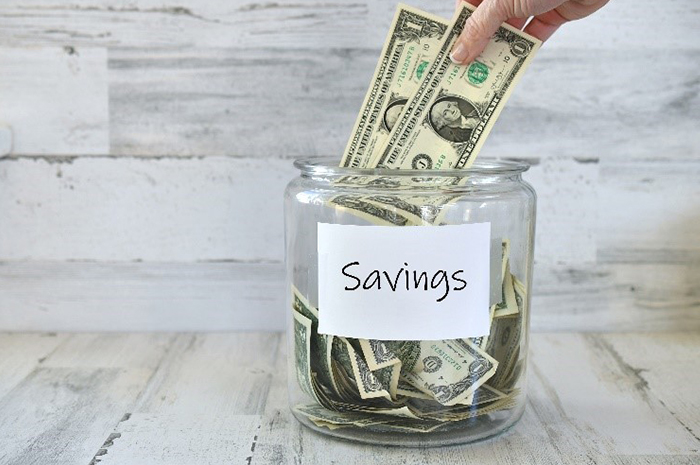
The 30-Day Savings Challenge is a proven method to cultivate a habit of saving money consistently while avoiding impulse spending. Here's how it works: if you find yourself tempted by an impulse purchase, commit to thinking about it for 30 days. During this time, place the money you would have spent on the purchase into a savings account. This not only helps you avoid unnecessary spending but also allows you to save consistently and work towards your financial goals.
Impulse purchases can derail your budget and lead to unnecessary debt. The 30-Day Savings Challenge provides a structured approach to combatting these impulses, giving you time to consider your purchases thoughtfully and prioritize your financial well-being. By delaying gratification and focusing on your long-term goals, you'll develop healthier spending habits and build a stronger financial future.
How 1st Community Credit Union Can Help
At 1st Community Credit Union, we're committed to helping our members achieve financial success. That's why we offer a range of savings accounts tailored to meet your needs, whether you're saving for a rainy day or planning for the future. Our friendly team is here to assist you every step of the way, from opening your account to setting up automatic transfers for your 30-Day Savings Challenge.
Our savings accounts come with a variety of benefits, including competitive interest rates, no monthly maintenance fees, and convenient access to your funds. Whether you prefer a traditional savings account or a high-yield option, we have the perfect solution to help you reach your savings goals.
Making Smart Financial Choices
The 30-Day Savings Challenge empowers you to make informed decisions about your finances. By taking the time to consider your purchases and set aside money for savings, you'll gain a greater sense of control over your money and avoid falling into the trap of impulse spending. Plus, with the help of our savings calculator, you can track your progress and see how your savings grow over time.
As you progress through the 30-Day Savings Challenge, you'll develop a deeper understanding of your spending habits and priorities. You'll learn to distinguish between needs and wants, and you'll become more intentional about how you use your money. By cultivating these habits, you'll set yourself up for long-term financial success and achieve your savings goals faster than you ever thought possible.
Join the Challenge Today
Ready to take the first step towards financial freedom? Join us at 1st Community Credit Union and start your 30-Day Savings Challenge today! Visit our website or stop by one of our branches to learn more about our savings accounts and how we can help you achieve your financial goals.
Begin your savings journey with 1st Community Credit Union today. Let's work together to achieve your financial goals!